
Back to Standard Time: Better in Sync with Natural Daylight

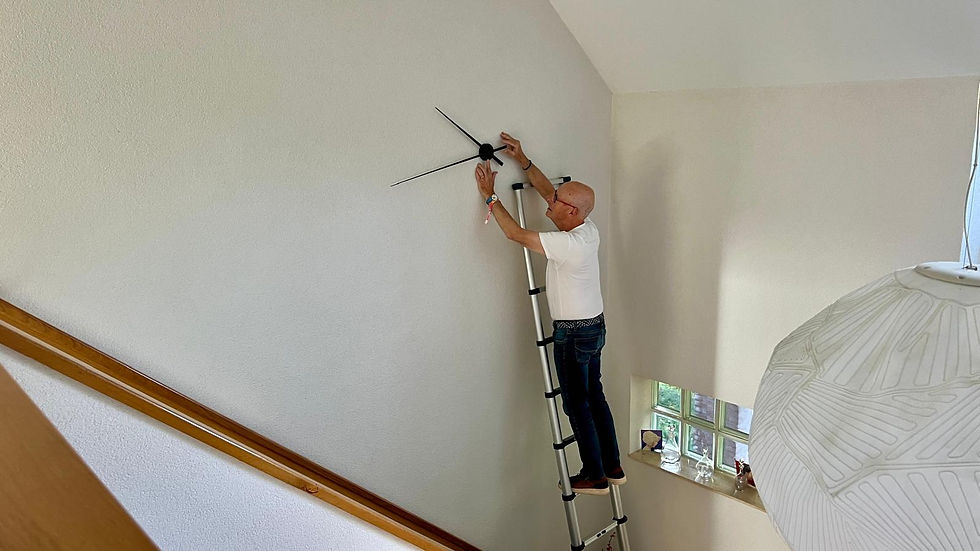
On Sunday, 25 October, clocks across Europe moved back one hour. While many refer to this as the start of ‘winter time’, we are actually returning to standard time: the time that more closely aligns our daily routines with the natural cycle of the sun. And that's good news for our biological clocks.
Why standard time is better for our body clocks
Our bodies operate on an internal 24-hour clock, known as the circadian rhythm. This biological clock regulates essential processes such as sleep, alertness, hormone production and metabolism.
One of the most important signals keeping this clock in sync with the outside world is natural daylight. Exposure to bright light in the morning helps our bodies recognise when it's time to wake up and be active, while darkness in the evening signals that it's time to wind down and prepare for sleep.
During daylight saving time (summer time), our clocks are artificially moved one hour forward. This means that sunrise and sunset occur an hour later according to the clock, creating a greater mismatch between our social schedules and the natural light-dark cycle.
Returning to standard time brings our clock time closer to solar time, allowing our daily routines to better align with the natural rhythm of daylight.
Standard time, not winter time
The term ‘winter time’ can be misleading. Standard time is not simply a seasonal adjustment: it is the time system that more closely reflects the position of the sun.
While the exact alignment varies depending on geographical location and time zone, standard time generally provides a better match between our social clocks and the natural daylight cycle than daylight saving time.
This is why many sleep and circadian rhythm researchers advocate adopting permanent standard time rather than switching between summer and winter time.
Make the most of natural daylight
We believe that access to the right light at the right time is essential for health and wellbeing.
As the days become shorter, it is especially important to make the most of the natural daylight available to us.
Give your eyes plenty of (day) light as soon as you wake up. This signals to your body that the day has begun.
Start your day with daylight. Spend time outdoors in the morning, even when it's cloudy.
Let daylight into your indoor spaces. Open curtains and blinds and position yourself near windows whenever possible.
Seek bright light during the day. Adequate daytime light supports alertness and helps maintain a healthy circadian rhythm. Use lighting that provides at least 500 lux at eye level.
Dim the lights in the evening. Reduce exposure to bright artificial light before bedtime to support your body's natural preparation for sleep. Keep light levels below 10 lux for three hours before bedtime.
At night avoid screens as much as possible. Keep light levels below 1 lux at night, even when you get out of bed.
A step towards better alignment
Changing the clocks can temporarily disrupt our routines, and it may take a few days for our bodies to adjust. But returning to standard time is a step towards better alignment between our daily schedules and the natural light-dark cycle.
This Sunday, we're not just turning our clocks back one hour. We're bringing our social time a little closer to the rhythm of the sun.
Because when our lives are better aligned with natural daylight, our bodies benefit too


Kommentare