Search Results
Search this site
350 results found with an empty search
- A Wake-Up Call: We Are Designing Light Against Human Biology
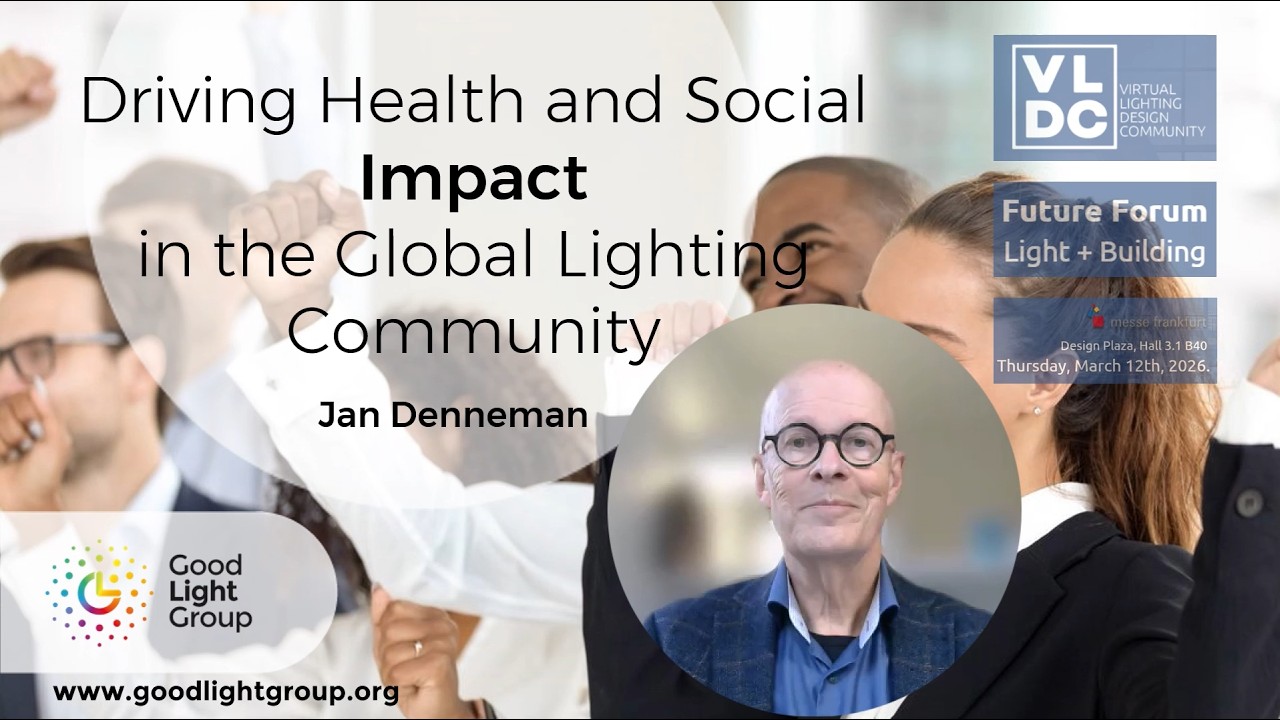
Last week, Jan Denneman had the opportunity to speak at Light + Building in Frankfurt as Chair of the Good Light Group. What continues to strike him is this: we spend around 90% of our time indoors, yet the light around us is fundamentally misaligned with our biology. The impact is not subtle. It shows up in poor sleep, low energy, reduced wellbeing, and long-term health risks. And still, we treat this as normal. The reality is simple. During the day, most indoor environments are far too dim to properly stimulate our circadian system. In the evening, they are often too bright, sending the wrong signals to our body when it should be preparing for rest. On top of that, artificial light differs significantly from natural daylight in its spectral composition. We are, quite literally, designing light against human biology. Science has already given us clear guidance. During the day, we need around 500 to 1,000 lux at eye level to properly stimulate our circadian system. In the evening, light levels should drop below 20 lux, and at night to almost complete darkness. Yet in practice, most people receive only a fraction of the light they need during the day, unless they are sitting right next to a window. The result is a continuous disruption of our internal clock. The consequences are significant and well documented. Light affects how we sleep, how we feel, how we perform, and how healthy we are over time. If we improved sleep alone through better lighting, the economic value would be enormous. So why is this not happening at scale? Because we are still optimising for the wrong thing. The 3–30–300 rule makes this painfully clear. For every €3 spent on energy and €30 on the building, organisations spend around €300 on the people inside (per 0.1m² per year). Yet lighting decisions are still largely driven by saving a fraction of the €3, while ignoring the much larger impact on the €300. This is where the real opportunity lies. Not in squeezing out another percentage of energy savings, but in improving human health, wellbeing, and performance through better light. Indoor lighting should not be treated as a purely technical or efficiency-driven system. It is a health intervention hiding in plain sight. That means this is not just a topic for the lighting industry. It is a responsibility across the entire ecosystem shaping our indoor environments, from designers and architects to installers, building owners and investors, and not least employers who care about the wellbeing of their people. In this short clip, Jan explains why it is time to rethink how we design light indoors, and why the cost of inaction is far greater than we tend to assume. Watch video
- 24th Good Light Group meeting
We’ve organised our 24th Good Light Group meeting. The topics included: 1. Jan Denneman - Good Light Group news 2. Lawrence Lin – Good Light Group Asia 3. Kevan Shaw – The aging eye Photo by Andres Sanz on Unsplash Missed the Good Light Group Meeting? Watch the presentions online here: Good Light Group news - Jan Denneman The aging eye - Kevan Shaw
- Step 2 and 3 how to optimize indoor light for better energy and focus
Spending time outdoors is ideal, but many of us still spend large portions of the day inside. When natural daylight is limited, optimizing your indoor light environment becomes essential for maintaining energy, focus, and a healthy daily rhythm. These two simple steps can make a big difference. Photo by Surface on Unsplash Step 2: Stay within one meter of a window When you’re indoors, your proximity to natural light matters more than you might think. Light intensity drops dramatically the farther you move away from a window. By staying within one meter of a window, you allow your eyes to receive significantly more daylight, even on cloudy days. Working, reading, or relaxing near a window helps: Support your circadian rhythm Improve alertness and concentration Reduce eye strain compared to dim indoor spaces If possible, position your desk, dining table, or favourite chair close to a window. Even indirect daylight is far more powerful and biologically effective than most indoor lighting. Step 3: Use high-quality electric lighting during the day When natural daylight isn’t enough, especially in windowless rooms or when your desk is more than a meter away from a window, high-quality electric lighting is essential. Poor or insufficient lighting can leave your body in a “low-energy” state, even if you feel mentally busy. To properly support daytime alertness:Ensure your eyes receive at least 500 lux during the daytime Use bright, evenly distributed lighting rather than a single dim lamp Choose lighting designed for daytime use that compensates for the lack of daylight Reaching 500 lux at eye level helps signal to your brain that it’s daytime, supporting focus, productivity, and mood. This is especially important if you work indoors for long hours. Creating a light-smart indoor environment Combining natural and artificial light is the key: Sit close to windows whenever possible Supplement with high-quality electric lighting when daylight is lacking Prioritize brightness during the day and reduce it in the evening By managing your indoor light exposure intentionally, you help your body stay Aligned with its natural rhythms—leading to better energy during the day and better sleep at night. Good lighting isn’t just about seeing better. It’s about living better, even indoors.
- It does Lighting joins our group
We are very happy to welcome it doens Lighting to our group! It does Lighting is an independent, qualified, and evidence-led company with nearly 40 years of experience. They get to the root of what light means and how it acts as nutrition for the body’s cells, and they are highly experienced in designing healthy lighting schemes. “I was pleased to accept the invitation to join the Good Light Group as a Scientific Advisor. The group brings together an international cohort of respected researchers and professionals who share a commitment to advancing the science of light and its impact on human health. My involvement is voluntary, and I joined because the organisation’s values, ethics, and science-based approach strongly align with my own work in light and health. The Good Light Group is helping to promote a clearer understanding of what good light means for healthier, more resilient lives, and I am delighted to contribute to that mission.” Lorraine Calcott Director and Principal Designer it does Lighting
- Step 1 Spend at least 2 hours outside during the day
In our busy, screen-filled lives, it’s easy to spend most of the day indoors. But making time to step outside, particularly in the morning, can have a huge impact on your overall health and well-being. In fact, scientists recommend spending at least 2 hours outside during the day, with a good portion of that time in the morning if possible. Photo by cal gao on Unsplash The power of morning light Morning sunlight plays a vital role in setting your body’s brain clock, also known as your circadian rhythm. Getting natural light early in the day helps signal to your brain that it’s time to wake up and be alert. This can lead to better focus, improved mood, and even better sleep at night. Boost your mental well-being Time spent outdoors has been shown to reduce stress, anxiety, and mental fatigue. Starting your day outside, whether it’s a walk, stretching, or simply enjoying your coffee, can set a positive tone for the hours ahead. Easy ways to get your 2 hours outside Spending two hours outdoors doesn’t have to happen all at once. You can break it up throughout the day: Take a morning walk or commute on foot Eat lunch outside or in a park Schedule outdoor breaks instead of indoor ones Do phone calls or meetings while walking outside or at least close to a window Make It a Daily Habit Think of outdoor time as a non-negotiable part of your day, just like eating or sleeping. By prioritizing at least 2 hours outside each day, especially in the morning, you’re investing in better energy, clearer thinking, and long-term health. Sometimes, the simplest habits make the biggest difference. So tomorrow morning, step outside, take a deep breath, and let the day begin naturally.
- Natural daylight has a beneficial impact on the metabolic circadian rhythm of patients with type 2 diabetes
A blog by Ivo Habets “Natural daylight during office hours improves glucose control and whole-body substrate metabolism” The circadian timing system regulates many processes in the human body. While it is best known for controlling our sleep–wake cycle, metabolism also follows a strong daily rhythm. This includes processes such as glucose regulation, insulin sensitivity, and substrate use, which vary across the day in a coordinated manner. The main entrainment signal for the circadian rhythm is natural light, rich in blue-white light, detected by retinal cells in our eyes. Nowadays, however, much of our daytime is spent indoors under constant artificial lighting that differs substantially from natural daylight in both intensity and spectral composition. It is also known that people with metabolic diseases such as type 2 diabetes show disturbances in their circadian metabolic rhythms. Until now, it has been unknown how light exposure affects their main circadian rhythm and the regulation of metabolism as a consequence. A recent study by Harmsen et al. investigated the effects of daytime light exposure on metabolic outcomes in people with type 2 diabetes. Participants were exposed to two different lighting conditions for five consecutive days. In one condition, they were exposed only to artificial indoor light. In the other condition, they were exposed to natural daylight behind a window between 8:00 and 17:00. Other factors, such as meals and daily routines, were controlled. The results showed that glucose control was better during the natural daylight condition, as indicated by more time spent within normal glucose levels when participants were in the natural daylight condition. However, there was no difference in the mean glucose levels between the two conditions. Nevertheless, this improvement in glucose stability is clinically meaningful, as fluctuations in glucose are associated with metabolic complications. In addition, substrate use was assessed at multiple time points at the end of the week. Participants relied more on fat metabolism in the natural daylight condition compared to the artificial light condition. This effect was most pronounced when the intensity of natural light was brightest. These findings suggest that daylight may strengthen the daily rhythm of macronutrient utilisation. During the last evening of the week, melatonin levels were also measured. While the onset of melatonin secretion did not occur earlier, melatonin concentrations after onset were higher in the natural daylight condition. This study demonstrates that metabolism is influenced by the circadian system and that natural light acts as a key regulator. Importantly, natural daylight exposure should not be viewed as a treatment or cure for metabolic disease; rather, it can support circadian alignment through daytime light exposure and therefore plays a valuable supportive role in improving disrupted metabolic rhythms. Read the full article here
- The Hidden Part of Sunlight: Why Near-Infrared Light Matters
A blog post by Dr. Aida Farshadi For millions of years, humans lived under the full spectrum of sunlight. Our physiology evolved not just with visible light, but also with near-infrared light (NIR), an invisible wavelength that makes up nearly half of the sun's energy reaching Earth. Photo by Todd Rhines on Unsplash What is near-infrared light and why we're missing it? Near-infrared sits just beyond the red end of the visible spectrum, in the 700–1100 nm wavelength range. Unlike shorter wavelengths that stop at the skin surface, NIR penetrates centimeters into the body, reaching muscles, blood vessels, and the mitochondria within those deeper tissues. Think of mitochondria as tiny batteries inside our cells. Research shows that NIR light helps recharge these batteries, boosting cellular energy while also improving blood flow. These aren't exotic laboratory effects; they appear to be part of how our bodies evolved to interact with sunlight. Here's the challenge: modern life has effectively removed NIR from our daily light exposure. Outdoors, sunlight delivers substantial NIR irradiance to our skin, in the range of tens to hundreds of milliwatts per square centimeter. But indoors? Architectural glass blocks most solar NIR. And while incandescent bulbs and candles do emit some infrared, their intensity is one to two orders of magnitude lower than natural sunlight. This matters because NIR effects are dose-dependent. Below a certain threshold, there is no meaningful biological response; just negligible background exposure. Simply having "some" infrared in a light source is not enough; the irradiance must approach levels comparable to what the sun provides. Most indoor environments fall far short of this. This lack of NIR may contribute to common complaints of modern indoor life: fatigue, poor sleep, reduced alertness, and slower recovery. While definitive causal links are still under investigation, the emerging picture suggests that NIR is not a luxury; it's closer to an environmental nutrient we've unknowingly removed from our daily lives. What can we do? The simplest solution remains: spend more time outdoors. Even on a cloudy day, natural daylight delivers far more NIR than any indoor environment. For those of us who spend most of our time inside, the future may include purpose-built NIR lighting: calibrated sources designed to restore this missing part of the solar spectrum. Not to replace sunlight, but to bring back what modern architecture has filtered out. And there's more to explore. We know that blue light entrains our circadian system, but in nature we never receive blue light in isolation; it always arrives alongside the full spectrum, including NIR. Understanding how these wavelengths might work together could open new directions in light and health research. Good light isn't just about brightness or colour. It's about the full spectrum, including the part we cannot see. References: Hamblin MR. Mechanisms and applications of the anti-inflammatory effects of photobiomodulation. AIMS Biophysics . 2017;4:337–361. Avci P, Gupta A, Sadasivam M, et al. Low-level laser (light) therapy (LLLT) in skin: stimulating, healing, restoring. Seminars in Cutaneous Medicine and Surgery . 2013;32:41–52. Jeffrey G, et al. LED lighting undermines human visual performance unless supplemented by wider spectra like daylight. Nature Scientific Reports . 2026; 16:3061.
- Good Light Group Asia
Launch of Good Light Group Asia We are very pleased that Lawrence and his team have taken the initiative to establish Good Light Group Asia. This organization is dedicated to promoting the use of good indoor light. Across Asia, we see a growing awareness of the impact that light and lighting have on health and well-being. This awareness can be seen within the lighting industry, academic institutions, and governments. This is highly relevant. Just like elsewhere in the world, most people in Asia spend their days indoors, often shielded from daylight. They are exposed to light levels that are too low during the daytime and too bright in the evening. Many of us recognize the loss of energy this causes in our daily lives. Scientific evidence clearly shows that these lighting patterns affect sleep quality, mood, alertness, energy levels, and overall health. We strongly believe that Asia has a unique opportunity to take these findings seriously. The region can become the global leader in developing healthier lighting practices and innovative lighting solutions. Asia is home to an exceptionally innovative lighting industry. This industry is strongly supported by universities, research institutes, and standards organizations. With more than half of the world’s lighting manufacturers located in Asia, the potential for positive impact is enormous. Good Light Group Asia will play an important role in translating scientific knowledge into clear and practical guidelines for the lighting value chain. This includes lighting manufacturers, lighting designers, architects, installers, and, last but not least, the general public. By increasing public awareness and stimulating innovation, we can meaningfully improve the quality of life for billions of people. We are proud and personally very excited that we are now in the process of creating Good Light Group Asia as an independent non-profit organization. It will be closely aligned with the global mission, values, and recommendations of the Good Light Group. We look forward to working together with our partners in Asia to improve health and well-being through better light. Jan Denneman Chair of the Board
- SunLED is joining the Good Light Group
SunLED is a Dutch start-up at the forefront of near-infrared light research and its effects on human health and well-being. The near-infrared part of the sunlight spectrum is often missing from our indoor lives; however, it is essential for our bodies. Near-infrared light can penetrate deep into our skin and activate energy production in our cells. It has multiple proven health benefits for the human body, including: Improved mental health - makes you feel more energized, focused, and improves your mood A better immune system reduces inflammation and helps balance your immune system. Improved physical health – lowers resting heart rate, supporting heart function. ...and more. SunLED develops near-infrared light technologies and devices to give people access to the health benefits of sunlight. Our first product - SunBooster - improves mood and boosts energy easily while you work behind your screen or laptop. This fits perfectly into the idea of Good Light Group for improving lives with the right light. More info
- We are now an official CPD Course Provider of CIBSE
The CPD covers Designing Lighting to Promote Better Sleep. It involves an in-depth look at what sleep is, what circadian rhythms are and light’s entrainment of them, the effect of circadian disruption on sleep and the knock-on negative effects of sleep deprivation for general health. Connected with above, shortcomings of many indoor lit environments are discussed, followed by a look at lighting recommendations which can go a long way toward solving these shortcomings. The presentation then moves from the academic to the practicable and shows what an integrative (ie looking at visual and non-visual needs) lighting design process looks like. An example of putting healthy lighting design into practice wraps up the course. More info
- What is light?
Summary of Ulysse Dormoy’s article “What Is Light?” “It occurred to me that since I started posting articles and thoughts about light, I haven’t yet raised the question - ‘ What is Light? ’ – actually, in 30+ years in the lighting industry it's not a question I've challenged myself with.” – Ulysse Dormoy Light exists in a state of duality. It behaves both as a wave and as a particle, a phenomenon known as wave–particle duality. Like the classic “chicken or egg” question, it challenges ideas of origin and cause. Scientifically, light has always been one phenomenon with two inseparable aspects. As a wave, it explains how light propagates and interacts with matter; as a particle, it exists as photons, discrete packets of energy that enable quantum-level interactions. For centuries, scientists debated whether light was a wave or a particle, until early 20th-century quantum theory revealed it to be both. This insight, driven by Einstein and the rise of quantum mechanics, fundamentally reshaped physics, and it’s a surprisingly recent one. In a biological context, this single phenomenon serves two purposes: perception and physiological interaction. Life on Earth evolved under the full solar spectrum, long before vision existed. Light-sensitive cells appeared around 600 million years ago, with true vision evolving roughly 60 million years later. This suggests that light’s energetic, particle-based role may have preceded its visual one. Photons, the particle aspect of light, are central to life. As Geoffrey Guy notes in his book Quantum Biology , the photon may be the most important entity in the story of quantum biology. Yet modern lighting practice largely ignores this, reducing light to a visual tool rather than recognising its full biological power. Since the rise of LEDs, the focus has been almost exclusively on energy efficiency and lumens per watt. Light is treated as something that consumes energy, not something that provides it. Metrics for humans remain visual (lux and lumens), while plants receive energetic metrics (PPFD), solar energy is measured in kilowatt-hours, and food is measured in calories. Why don’t we measure light’s energetic contribution to human wellbeing? Research into quantum biology highlights that different parts of the spectrum play different roles. Visible light fuels life through photosynthesis, while near- and far-infrared light supports mitochondrial function, helping cells produce ATP efficiently, like lubrication for the body’s engine. Regular exposure to these photons may help maintain balance, resilience, and long-term health. Modern lighting and glazing, in the pursuit of efficiency, have effectively “ultra-processed” light, stripping out wavelengths that were deemed inefficient but are biologically vital. Much like ultra-processed food, our indoor light environments may feed us visually but fail to nourish us energetically, especially given that we now spend over 90% of our time indoors. Light’s duality underpins not just vision, but health and vitality. The built environment has been designed almost exclusively for perception, neglecting light’s role in human sustainability. With ageing populations and longer working lives, maintaining health and productivity will be critical, and light has a role to play alongside nutrition, movement, oxygen, and sleep. We’re unlikely to reverse the trend of indoor living. Instead, we need spaces that help restore vitality, through thoughtful design, strategic exposure to biologically meaningful light, or simply by stepping outside for a daily photon shower. Light is not just for vision. It is for health, vitality, and human sustainability.
- Board Changes
Effective January 1, 2026, Dave Hollingsbee and Roger Sexton have stepped down from the Board of the Good Light Group. We would like to sincerely thank them for their many years of dedication, support, and valuable contributions to our mission as Board members. Both will continue to support the Group in other capacities. Their commitment has helped significantly strengthen our impact and global reach. At the same time, we are pleased to welcome Ulysse Dormoy , CEO of Atrium , as a new member of the Board. With extensive industry experience, strategic insight, and a strong passion for improving quality of life through better light, Ulysse will further strengthen the Group’s mission. Ulysse commented: “It is an honour to join the Board of the Good Light Group. I have long admired the organisation’s evidence-based commitment to improving human wellbeing through better light. Their mission to raise global awareness of the beneficial effects of good light on body and brain strongly resonates with me, and I look forward to contributing my industry experience and strategic perspective.” We look forward to working with Ulysse and continuing to expand and accelerate the positive impact of good light worldwide.